<img src="https://secure.leadforensics.com/124134.png" style="display:none;">

Why Choose Karl Fischer Moisture Titration? Benefits Compared with Other Methods

By Hank Levi on Tue, Aug 11, 2026 @ 01:40 PM

Accurate moisture measurement is critical to maintaining product quality and consistency. While several methods are available, Karl Fischer moisture titration stands out as one of the most reliable and precise techniques.

Karl Fischer moisture titration offers a reliable way to measure moisture in solids, liquids, and gases. By using a reaction between water and a Karl Fischer reagent to generate a measurable electrical signal, this method enables precise calculation of a sample’s moisture content.

A key advantage of Karl Fischer moisture titration is its exceptional accuracy. With the ability to detect moisture levels as low as 0.001%, it is well suited to applications where even trace amounts of water can affect product quality. Its high selectivity is another important benefit: because the method reacts specifically with water rather than other substances in the sample, it delivers dependable results even in complex mixtures.

Karl Fischer moisture titration is also highly versatile, supporting moisture analysis across a broad range of materials, including pharmaceuticals, food products, and industrial chemicals. Because it can also measure moisture in gases, it is valuable in applications ranging from natural gas processing to semiconductor manufacturing.

Compared with many other moisture-measurement techniques, Karl Fischer titration is relatively quick and straightforward to perform. Its automated workflow helps minimize human error while improving efficiency, making it well suited to high-throughput applications where speed and accuracy are essential.

Share this analysis with colleagues who may benefit from learning more about Karl Fischer titration.
Learn More or request a quote

Get more Karl Fischer Info (technical)

Request a quote for a Karl Fischer Titrator

Continue Reading

Karl Fisher Titration and 20 things you should know about it

By Hank Levi on Thu, Jul 02, 2026 @ 02:33 PM

questionsAs a provider of Karl Fischer testing instruments and support services, we regularly encounter a wide range of moisture analysis issues that affect operators, laboratory managers, and entire organizations. Over time, it has become clear that strengthening operator understanding of “the small details” significantly improves confidence, enhances performance and efficiency, and safeguards the accuracy of test results. Whether you are new to Karl Fischer titration and just beginning to work with moisture testing, or you are returning to the technique after not using your Karl Fischer titrator for some time, it is essential to regain proficiency quickly. The sooner you are fully up to speed, the sooner you can run reliable tests and deliver moisture results to the stakeholders who depend on them.

Learn more about Karl Fischer Titration

 To support this, we have developed a list of the 20 most critical questions that help operators move through the learning curve and deepen their understanding of Karl Fischer titration. Examples of the types of issues covered include: 1. “Our Karl Fischer displays ‘OVER TITRATION’ and the reagent is turning very dark. What is causing this?” 2. “Why will the instrument not switch into ‘Ready’ mode?” 3. “My results appear inconsistent or ‘all over the place.’ How should I respond?” 4. “We are using a solids evaporator and consistently obtaining zero moisture results. What is wrong?” 5. “How many tests can I run before I need to replace my reagents, and how do I know when it is time?” \{\{cta('a0cafc23-f529-49f0-8b5c-086b32216c0c')\}\} By accessing the complete list, you can reduce avoidable troubleshooting, better understand the root causes of common problems, and recognize why each issue matters for data integrity, compliance, and overall laboratory performance.


Created on 06/11/11 at 08:00:22

Learn more about Volumetric Karl Fischer Titration

Continue Reading

Troubleshooting High-Moisture Sample issues during Volumetric Karl Fischer Titration

By Hank Levi on Tue, Dec 23, 2025 @ 01:31 PM

Recently, we worked with a customer who owns one of our Volumetric Karl Fischer Titrators (MKV-710) and was experiencing unexpected issues when testing samples with high moisture content. Specifically, the customer observed that certain samples appeared to max out at around 1% moisture, after which the titrator would go into over-titration. Interestingly, this behavior only occurred with specific sample types.

To get to the root of the issue, we stepped back and reviewed the fundamentals of volumetric Karl Fischer titration. This back-to-basics approach helped clarify what was happening—and revealed several practical troubleshooting steps that may help others facing similar challenges.


Understanding the Basics

The MKV-710 Volumetric Karl Fischer Titrator is designed to measure moisture content from trace levels all the way up to 100% water, so measuring above 1% moisture should not be a limitation of the instrument itself.

Reagent Factor Check

The customer provided data showing that the Karl Fischer reagent factor was properly calculated using Honeywell Hydranal Composite 5, with a factor of:

5.0796 mg/mL

This is a very reasonable value and indicates the reagent and factor calculation were done correctly. Great start.


What Causes Over-Titration?

Over-titration occurs when the instrument delivers more Karl Fischer reagent than is required for the amount of water actually present in the titration cell.

Here’s how the process works:

  • The detector electrode senses moisture in the titration vessel.

  • It signals the titrator to dose Karl Fischer reagent (Composite 5).

  • The reagent reacts with and neutralizes the water.

  • Once all moisture is consumed, the electrode stops detecting water.

  • The instrument then calculates total water based on how much reagent was used.

If the electrode receives inaccurate information, the titrator may continue dosing reagent—leading to over-titration.


The Math Behind the Measurement

Understanding the math helps clarify what the instrument is doing:

  • Composite 5 reagent neutralizes approximately 5 mg of water per mL

  • 1 mg = 1,000 micrograms

  • Therefore, 1 mL of reagent ≈ 5,000 micrograms of water

  • All Karl Fischer titrators measure moisture in micrograms

Key Conversions

  • 10,000 ppm = 1.0% moisture

  • 5,000 ppm = 0.5% moisture

  • 1,000 ppm = 0.1% moisture

Moisture Calculation Formula

 
Moisture (PPM or %) = Water detected (µg) / Sample size (g)

As long as the sample size is known, the moisture result can be accurately calculated from the amount of reagent consumed.

                             Learn more about Volumetric Karl Fischer Titration


Common Causes of Over-Titration

If the instrument is overdosing reagent, a few common issues may be responsible:

1. Detector Electrode Issues

A faulty or aging detector electrode may not correctly sense when all moisture has been neutralized, sending incorrect signals to the titrator.

2. Poor Sample Mixing (Very Common)

If the sample does not dissolve or homogenize properly in the titration solvent, moisture can exist in localized “pockets.” This can confuse the detector electrode and cause continued dosing.

Solution:
Improve sample mixing and solubility. In some cases, adding a co-solvent such as xylene can significantly help break down the sample.

Pro Tip: Xylene can be added at up to 20% of the total sample volume to improve solubility.


Additional Pro Tips for Reliable Results

  1. Verify Instrument Performance
    Run a water check using a micro-drop of pure water. A recovery of 99% or higher confirms the titrator can accurately measure high moisture levels. When combined with a successful factor check, this strongly indicates the instrument is working correctly.

  2. Increase Pre-Stirring Time
    If samples have solubility challenges, adjust the method to stir for 60 seconds before titration begins. This simple change can dramatically improve consistency.

  3. Use Mixed Solvents When Needed
    For stubborn samples, try a solvent blend such as 80% methanol / 20% xylene to improve dissolution.

  4. Watch for Chemical Interferences
    Samples containing ketones, aldehydes, or problematic pH levels can interfere with Karl Fischer reactions and should be evaluated carefully.

                                      Learn more about Volumetric Karl Fischer Titration


Final Thoughts

When high-moisture samples appear to “max out” or cause over-titration, the issue is often sample-related rather than instrument-related. Verifying the basics—reagent factor, instrument performance, electrode condition, and sample mixing—can quickly narrow down the root cause.

A systematic troubleshooting approach not only resolves the immediate problem but also builds confidence in the results moving forward.


Continue Reading

Benefits of Using Karl Fischer Moisture Titration vs. Other Methods

By Hank Levi on Thu, Jun 22, 2023 @ 04:33 PM

Accurate measurement of moisture content is essential to ensure the quality and consistency of your products. There are several methods available for measuring moisture content, but one of the most reliable and accurate methods is Karl Fischer moisture titration.

Karl Fischer moisture titration is a widely used method for measuring moisture content in a variety of materials, including solids, liquids, and gases. This method is based on the reaction between water and a Karl Fischer reagent, which produces a measurable electrical signal. The amount of water present in the sample can be calculated from the electrical signal, providing a precise measurement of moisture content.

One of the main benefits of using Karl Fischer moisture titration is its high accuracy. This method can detect moisture levels as low as 0.001%, making it ideal for applications where even small amounts of moisture can have a significant impact on product quality. In addition, Karl Fischer moisture titration is highly selective, meaning that it only reacts with water and not other substances in the sample. This makes it an excellent choice for measuring moisture content in complex mixtures.

Another advantage of Karl Fischer moisture titration is its versatility. This method can be used to measure moisture content in a wide range of materials, including pharmaceuticals, food products, and industrial chemicals. It can also be used to measure moisture content in gases, making it an essential tool for applications such as natural gas processing and semiconductor manufacturing.

Compared to other methods for measuring moisture content, Karl Fischer moisture titration is also relatively fast and easy to perform. The titration process can be automated, reducing the risk of human error and increasing efficiency. This makes it an excellent choice for high-throughput applications where speed and accuracy are essential.

Share this with associates who may find  an analysis of Karl Fischer titration useful.

Learn More or request a quote

Get more Karl Fischer Info (technical)

Request a quote for a Karl Fischer Titrator

Continue Reading

Introducing our technical Web Helpers!

By Hank Levi on Mon, Nov 23, 2020 @ 01:58 PM

Hello!  Please meet our new Web Helpers!  Moisture Elle, Karl Fischer, Shaker Sam, Terri Tenso, and Vivian Visco!  Each of our helpers will provide technical information ranging from general topics to more in-depth discussion pertaining to; Moisture testing, Karl Fischer Titration, Particle Size Analysis, Surface Tension, and Viscosity.


Continue Reading

How an oil evaporator works with a Karl Fischer Titrator

By Hank Levi on Mon, Aug 26, 2019 @ 11:13 AM

Evaporators configured for use with Karl Fischer moisture testers can provide added benefit when testing for moisture in samples that are not easily solubilized in the titration cell.  In some cases even if it's possible to solubilize the sample in the titration cell you may find that it is better to use an evaporator to improve repeat testing by keeping the cell clean.  While traditonal Karl Fischer moistutre testing is performed using a direct injection method where a syringe and needle is used to introduce the liquid sample into the titration cell, the use of evaporators follow a different approach. 

Within the evaporator family there are SOLIDS EVAPORATORS that can range from 0 to 300 degree C as well as high heat solids evaporators that can range from 0 to 1,000 degree C. 

A typical OIL EVAPORATOR will have a range from 0 to 300 degree C. 

Solids evaporators will typically be used to measure moisture in these types of samples:

  • plastic pellets (pte, etc)
  • plastic parts (you can cut into smaller pieces with a pair of scissors)
  • paper material (transformers)
  • thick grease samples
  • thick petroleum based samples like heavy paints, etc
  • and the list goes on

Oil evaporators will generally be used when working with heavy crude oil samples with high turnover testing (keeping the cell clean).

In this video we will discuss and show how the oil evaporator works with a Karl Fischer Titrator.


Talking points include:

  • Karl Fischer Titrator
  • Oil Evaporator
  • Base Oil
  • Bubbler Tube
  • Nitrogen Gas Source
  • Regulator
  • Thermocouple
Continue Reading

How to test for moisture in Jet Fuel Oil using a Karl Fischer titrator

By Hank Levi on Mon, Sep 21, 2015 @ 03:15 PM


From start to finish watch this short video to see how a sample of Jet Fuel Oil is tested for water content using a karl Fischer Titrator. For this training video we use:

  1. The Aquapal III coulometric Karl Fischer Titrator (setup as a dual reagent configuration)
  2. Reagents; Anolyte is coulomat AG and the catholyte is coulomat CG
  3. A 4-place analytical balance SA-210
  4. And a disposable syringe and disposable needle

In this video you will see the steps for running a test successfully including how to:

  1. Extract your sample into the syringe
  2. How to weigh your sample and tare the balance
  3. How to inject a sample properly
  4. How to input the sample weight and obtain a final result


Find out more about the Aquapal III

We hope you found the video helpful and informative!  If you think a colleague could benefit from this please share it with them!  Click on the twitter button to automatically share this video!

Tweet: How to test for moisture in Jet Fuel Oil using a Karl Fischer Titrator http://bit.ly/1NJ8If4"How to test for moisture in Jet Fuel Oil using a Karl Fischer titrator"


Thanks for Watching!
Continue Reading

Review of KEM's new titration line

By Hank Levi on Tue, Jun 09, 2015 @ 04:11 PM


Review of KEM's new titration line 

AT-710S_M Automatic Titrator

I don't know about you but I have to admit that I enjoy learning about new technology.  Whether it's smart phones, cars, or kitchen appliances I think it's fun to find out about how a product has changed (hopefully for the better). For the most part a lot of consumer products see a change or upgrade about once every year. This is not really the case for titrators where maybe it's only every 6 to 8 years before we see a new generation unveiled.  I guess that's why I thought maybe it would be a good idea to take a look at this new 710 series that came out in February 2015.  I haven't actually ever written a "review" before so I decided to start by comparing what I know about some of the current titrator models and identify the things that pop out with the new titration line.   Here are my observations and comments.


1. There are now three model levels; entry, mid-level, and flagship within each category (volumetric Karl Fischer, coulometric Karl Fischer, and automatic potentiometric titrator) 

Find more Coulometric Karl Fischer Titrator information

My comment: I like the scale of the models as it can be helpful for those with varied budgets and needs.  I like the concept that you can start with getting only the basic model at first and then later bring in the flagship model and tie them all together into one system.  It will be interesting to see how people approach these options and whether the ability to expand a system is desirable or not.
710_series_titrator_with_2_burettes

2. All of the automatic titrators now can accommodate two burette drives

 AT-710 AutomaticTitrator information

My comment: The automatic titrators come with one burette drive but being able to add a second burette drive allows an operator to run two separate titrations (titrants) without having to use an automatic piston burette.  Historically most titrator manufacturers offered only a single burette drive but it seems like this is changing.  It's kind of a big deal for those who run two different titrations and don't want to purchase an automatic piston burette.  I like this new capability.

3.  A new burette design for the automatic titrators and volumetric Karl Fischer titrators.

SmartBuretteUnit

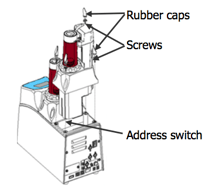
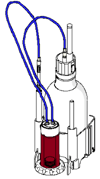
My comment: The burettes appear they will be easier to store and swap as the titrant bottle, burette and nozzles all go together as one smaller unit.   The burettes are now "smart" burettes and can store all of the reagent information within the head of the burette.  I like this.

Learn more about Volumetric Karl Fischer Titration

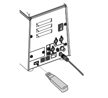
4.  More Input/Output options for operators to move  and store data.  I/O options include LAN connectivity/URL, USB hubs, USB thumb drive ports, .CSV file format, .PDF file format, barcode readers, foot switches, and keyboards.710seriesUSB

My comment:  More technology is built into these units. I think it was overdue so I am glad to see it finally arrive.

AT710_w_propeller_or_magnetic_stirrer

5.  Automatic Titrators now come with a propeller stirrer by default but can swap for a magnetic stirrer instead.

My comment: I like the option to do both but I think maybe the magnetic stirrer should have been the default and the propeller as the option.


6.  A new Wireless/ Wired 8.4 inch color touch panel controller (MCU).

MCU_screen_view_with_multiple_units

My comment: This only comes with the mid-range and the flagship models.  The controller can sit next to the titrator or be carried around like a clipboard.  Operators can control the titrator through protective glass if necessary.  I'm not sure how many people will elect to use the wireless vs. the wired connection but it's nice to have the added capability.  Nice.

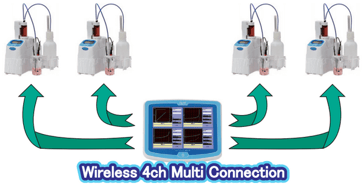
7.  Multi-titrator integration.  The wireless/wired MCU can control up to 4 different titrators simultaneously (any combination of Karl Fischer or automatic titrator) 

MCU_controller for 710 series titrators

My comment: This feature is reserved for the flagship model.  I can see this being useful for those needing to run both moisture and acid for example.  Unfortunately the mid-level model MCU cannot be upgraded to the MCU flagship model so if you think you might expand later don't go with the S model.  Your better off getting the basic "B" model and then later tying them all together from the flagship model.

 710seriesmulticontrol

8.  Free method making software.

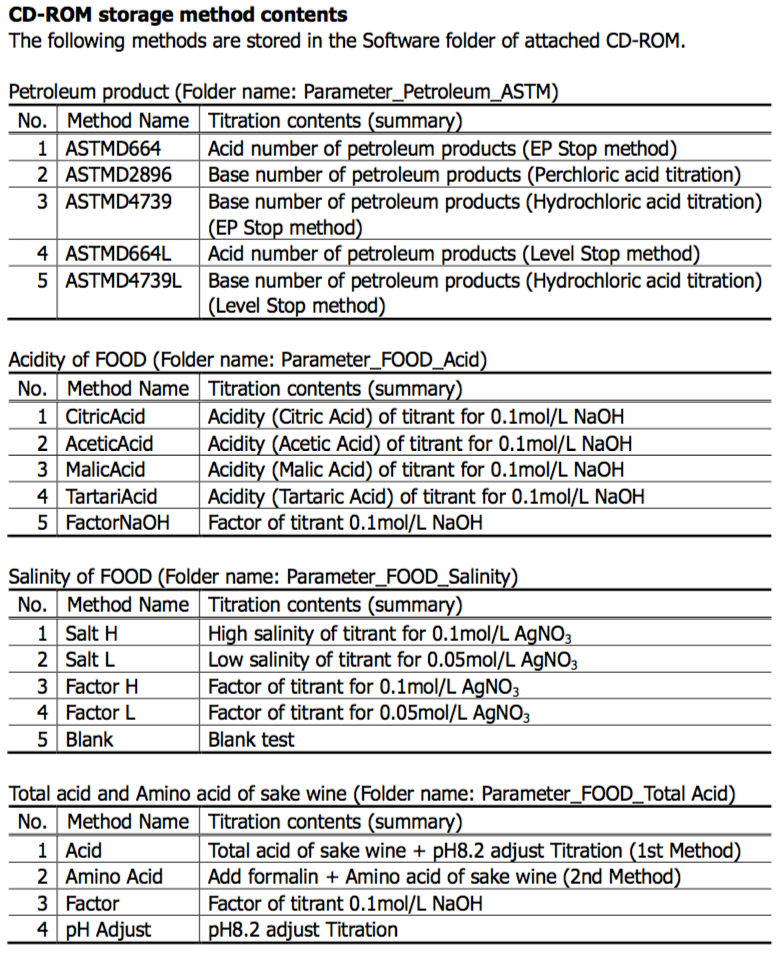
My comment:  All of the titrators now come with a CD that allows you to create methods on your PC and then transfer methods to the titrator.  You can also pull methods off of the titrator and edit it in the PC.  The software also comes with various popular methods pre-loaded to help get methods setup quicker.  I'm not so sure how robust this software is but free is nice.

CDstoredmethods


CONCLUSION:

Well I hope this was helpful in finding out quickly what the updates are for the new 710 series.  At this point since it's so new we will have to wait to evaluate how customers feel about their user experience and get their feedback on what they liked most and what they liked least.  If you have any questions or comments you can email me at info@scientificgear.com


Continue Reading

How to use Karl Fischer Grease

By Hank Levi on Sun, Jan 19, 2014 @ 01:57 PM

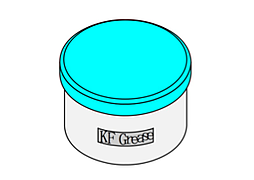
Karl Fischer GreaseCertain types of Karl Fischer vessels require the use of Karl Fischer grease. Vessels with smooth port openings need a thin layer of the grease applied to plugs, electrodes, dessicant tubes, bubbler tubes and injection port plugs to help form a snug fit.  Decreasing or limiting "ambient moisture" from getting into the vessel - otherwise known as "drift" - is the key benefit of using Karl Fischer grease.  Another benefit of Karl Fischer grease is that it also helps prevent chipping of glass on glass fittings.  Watch this short video to see how Karl Fischer Grease should be applied.
Learn more about Karl Fischer Titration
If you find this information helpful please consider subscribing to our blog.  Once you subscribe you will get notified when we post a new article.

Continue Reading

How do Ketones & Aldehydes affect Karl Fischer moisture testing?

By Hank Levi on Mon, Sep 23, 2013 @ 04:32 PM

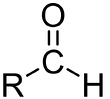
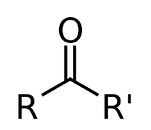
Measuring moisture using a karl Fischer Titrator is a common and popular choice among operators.  Karl Fischer titration provides excellent accuracy at the part-per-million (PPM) level and is widely accepted and trusted as a reliable method for measuring moisture.  Ketones and Aldehydes however are two organic compounds that can cause problems and lead to errors with measured results if they are present in a sample during testing.  The presence of these organic compounds can create an unwanted side-effect inside the titration vessel.

 ketoneWhat are the side-effects?   aldehyde

The effects are side-reactions that can either falsley increase your moisture results or falsley reduce your moisture results.  Depending on whether your dealing with ketones or aldehydes or both you will want to know how to deal with them.  

How do you solve the problem?

Once you have identified the problem you need to take stock in your equipment and the chemical reagents you are using.  The equipment setup and reagent choices you make can help you to suppress these side reactions and obtain accurate results.

Watch this short 3 minute video to learn about the preferred equipment setup and your chemical reagent choices.


 On a sidenote who knew that Ketones have an impact on the human body? Check out this cool review

Just thought it was interesting and wanted to share.

                           Still need help? Click here.


Continue Reading

Recent Posts