<img src="https://secure.leadforensics.com/124134.png" style="display:none;">

What are the best ways to measure salt and sodium in food?

By Hank Levi on Tue, Feb 17, 2015 @ 03:00 PM

Salt_and_Sodium_

What are the best ways to measure salt and sodium in food?

We have written other articles about salt testing including the Top 3 methods for measuring salt in food products and How to test for salt during food production.  But we felt this blog post was necessary to further explain how the popular methods differ during testing and why you might use one method instead of another. We also thought it was important to further explain the difference between Salt (NaCl) and Sodium (Na) and how it can impact your test results.

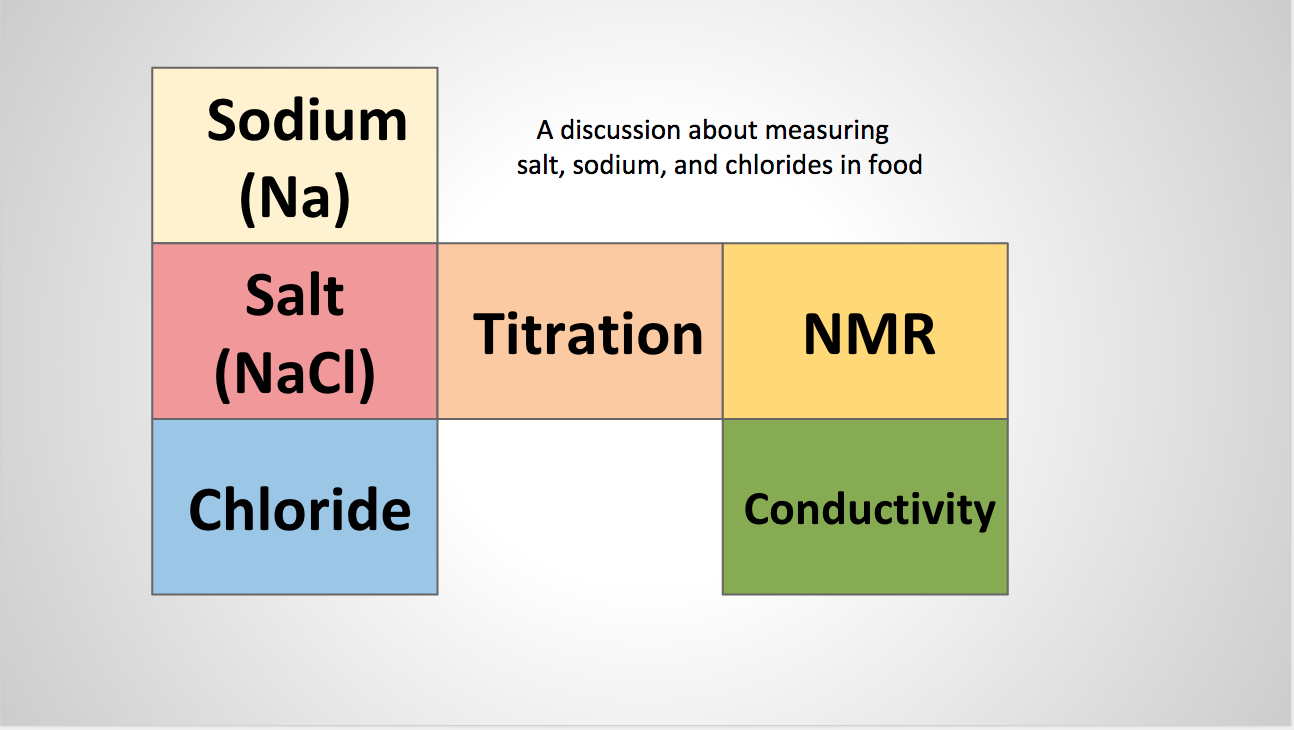
First thing you should know is "what are you trying to measure?"

  1. Salt (NaCl)
  2. Sodium (Na)
  3. Chloride (Cl)

The second thing is knowing your samples ingredients.

Knowing the component ingredients that make up a given food sample is very important!  If we randomly chose a method to test for salt for example without knowing the component ingredients we may discover we are way off with our answer.  Why?  Because without a clear understanding of the types of sodium and or chlorides that may be present in a sample it is possible to calculate an incorrect value either because the method of testing is incomplete for a given sample, or simple interference from other ingredients is occurring.  

Each method has it's own way of finding an answer.  Some methods look for chlorides in food, others look for sodium in food, while others measure indirectly the change in conductivity of a liquid as chlorides dissolve.  Each method has it's place and can be used effectively as long as the user knows it's capabilities and it's drawbacks. 

Understand your test objectives and choose an appropriate test method

We put together a presentation that goes into more detail on this and hope you watch it.

Watch the Full Presentation

Topics: Salt Testing
Continue Reading

Top 3 methods for measuring salt in food products

By Hank Levi on Thu, Jul 10, 2014 @ 04:41 PM

You may be saying to yourself, "Wait a minute! Last time you wrote about salt testing you said there were really only 2 popular methods being used.  What's going on and what is this 3rd method all about?"

Well, you are right.  Historically we have written about and discussed 2 popular methods where operators used either conductivity meters and, or, titration for testing salt in food products.  But recently we have seen a new development for testing salt levels in food products and thought it should be shared with you.  Before we do, let's review.

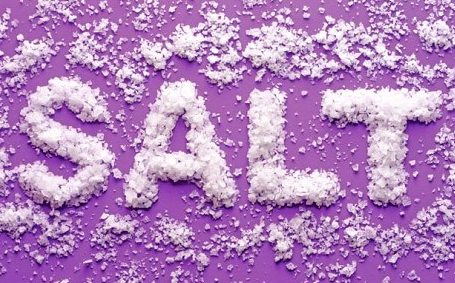
A quick overview on Salt:salt

When we talk about salt we need to agree on the terminology. 

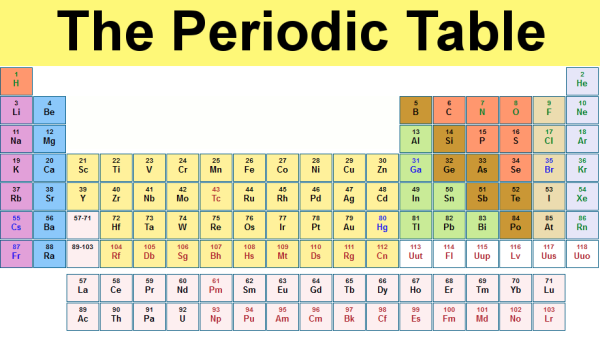
Table salt or "salt" that we think about in our foods is known as sodium chloride (NaCl).  Although you cannot find NaCl on the periodic table of elements shown below, you can see both sodium (Na) and chlorine (Cl).   What's the deal with chlorine you say?  Well, chlorine under standard conditions is actually a yellow-green gas but when chlorine atoms gain one electron they become a chloride ion (Cl-).  Since an ion cannot remain in a free state all by itself it must combine with another element(s) to form a compound.  Chloride (Cl-) is therefore a by-product of the reaction between chlorine (Cl) and an electrolyte such as sodium (Na).  Hence, sodium chloride (NaCl) is known as an Ionic Compound.  There are other "related" chlorides (Ionic Compounds) but not as common and they are; calcium chloride, magnesium chloride and potassium chloride (we will save a discussion about these chlorides for another blog post).

Sodium chloride (NaCl) is naturally occurring in much of the earth's crust and can be found in places like the Great Salt Lake Basin in Utah.  A gift to this earth, nature, and our bodies!  You see, the human body needs both sodium and chloride to function properly although it's worth mentioning that there is still debate about the effects of chloride levels in the body as comparedNa with the more well known negative effects we associate with sodium (Na) and high blood pressure. 
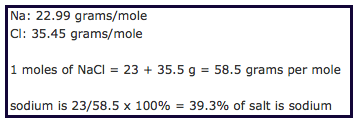
So, when we talk about measuring and monitoring salt levels we generally are saying that we want to know how much sodium (Na) is present.  Since table salt is Na+Cl- (NaCl) then, we approach our testing for NaCl accordingly based on the ratios of each elements atomic weight and mass percent:

[NaCl = 39.3372% Na + 60.6628% Cl]

These numbers are significant because if we look for (Cl) then we can determine (Na) and or (NaCl) by doing simple math, e.g. if you can find (Cl) then you can back into (NaCl) or determine (Na).

example


So that's it for the salt review, lets move on to the testing methods.


Method #1 - A review of the Conductivity Method:

"Conductivity meters" are based on the conductivity of water and is a measure of the waters ability to pass an electrical current.  Water with more ions present will conduct more electrical current.  Seawater has more ions and is more conductive than fresh water.  In our example for testing salt (NaCl) the chloride (Cl) readily dissolves in water.  The fact that chloride (Cl) dissolves in water is key.  The more chlorides (Cl) that dissolve, the greater the number of conductive ions that will be present and therefore increase the conductivity of the water, and vice versa for lesser amounts.  The conductivity levels measured then are compared with known standards and tables like seawater.  These numbers can then be reported in micro Siemens per centimeter or other conversion scales.

The conductivity method is an indirect measurement but it is easy and fast (several seconds).  It tends to be less accurate than other methods and has some limitations with the range of measurement.


Method #2 - A review of the popular titration method (mohr's method):

Titration can be performed manually or by using an automatic titrator.  This popular titration method determines the chloride ion concentration.  Silver nitrate is used as the indicator and is added until all of the chloride ions are precipitated.  So, this method also measures the amount of chloride (Cl) and uses the mass percent weights to determine sodium chloride (NaCl) and or sodium (Na).

This method for measuring salt is more involved, takes a little more time (3 to 6 minutes usually), but is very accurate to the parts per million (PPM) level.  The titration method does require the use of a silver electrode/ph electrode (or combined silver electrode), silver nitrate, and someone who understands how to run the method (manual or via automatic titrator).


Method #3 - A new method?  Nuclear Magnetic Resonance (NMR):

Nuclear Magnetic Resonance (NMR)?  Huh?  Nuclear Magnetic Resonance (NMR) has been around since 1938 and has benefited the field of chemistry and medicine in important ways, helping researchers and chemist to identify and measure certain elements found on the periodic table.


The Periodic Table


It's only now that technology has allowed for the miniaturization of the components (magnets, etc) necessary for making a benchtop NMR device.  This greater access and ease of use with NMR technology has the potential not only for researchers and chemist but for main-stream industry to find new and useful applications for testing materials with NMR. 

So, if you can see where this is going then, YES, you guessed it.  NMR can identify and measure sodium (Na) directly with part per million (PPM) accuracy.  I will say it again, this method measures total sodium (Na) directly with part per million (PPM) accuracy.  (NaCl) and (Cl) can be determined also as we know the mass percentages for these elements.  

Although it's a new concept for the food industry this new approach for measuring sodium could prove promising because it is easy, accurate to the part per million (PPM) level, and quick too (about 30 seconds per test).  


                      Learn more about salt testing using (NMR)

Continue Reading

How to use Karl Fischer Grease

By Hank Levi on Sun, Jan 19, 2014 @ 01:57 PM

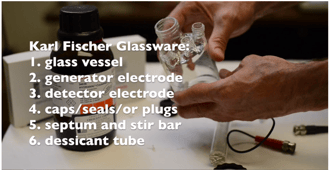
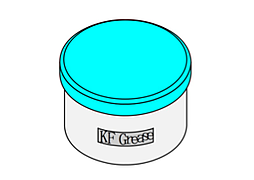
Karl Fischer GreaseCertain types of Karl Fischer vessels require the use of Karl Fischer grease. Vessels with smooth port openings need a thin layer of the grease applied to plugs, electrodes, dessicant tubes, bubbler tubes and injection port plugs to help form a snug fit.  Decreasing or limiting "ambient moisture" from getting into the vessel - otherwise known as "drift" - is the key benefit of using Karl Fischer grease.  Another benefit of Karl Fischer grease is that it also helps prevent chipping of glass on glass fittings.  Watch this short video to see how Karl Fischer Grease should be applied.

Learn more about Karl Fischer Titration
If you find this information helpful please consider subscribing to our blog.  Once you subscribe you will get notified when we post a new article.

Continue Reading

How do Ketones & Aldehydes affect Karl Fischer moisture testing?

By Hank Levi on Mon, Sep 23, 2013 @ 04:32 PM

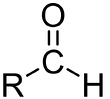
Measuring moisture using a karl Fischer Titrator is a common and popular choice among operators.  Karl Fischer titration provides excellent accuracy at the part-per-million (PPM) level and is widely accepted and trusted as a reliable method for measuring moisture.  Ketones and Aldehydes however are two organic compounds that can cause problems and lead to errors with measured results if they are present in a sample during testing.  The presence of these organic compounds can create an unwanted side-effect inside the titration vessel.

 ketoneWhat are the side-effects?   aldehyde

The effects are side-reactions that can either falsley increase your moisture results or falsley reduce your moisture results.  Depending on whether your dealing with ketones or aldehydes or both you will want to know how to deal with them.  

How do you solve the problem?

Once you have identified the problem you need to take stock in your equipment and the chemical reagents you are using.  The equipment setup and reagent choices you make can help you to suppress these side reactions and obtain accurate results.

Watch this short 3 minute video to learn about the preferred equipment setup and your chemical reagent choices.


 On a sidenote who knew that Ketones have an impact on the human body? Check out this cool review

Just thought it was interesting and wanted to share.

                           Still need help? Click here.


Continue Reading

How many dynes per centimeter can a tensiometer measure?

By Hank Levi on Mon, May 06, 2013 @ 11:57 AM

If your reading this post you probably already have an understanding of a few basic concepts.  For those who missed it here they are for review.

Basic Concepts

  • A dyne per centimeter is a unit of force
  • A dyne is defined as the force required to accelerate a mass of one gram at a rate of one centimeter per second squared
  • A dyne per centimeter is the unit traditionally used to measure surface tension and interfacial tension
  • Surface tension is a measurement taken on a liquid and Interfacial tension is a measurement taken between/among liquids.
  • Surface tension and Interfacial tension are both measured using an instrument called a tensiometer

I suppose it's worth mentioning why we decided to write this particular post about tensiometers and their surface tension and interfacial tension measuring limitations.   The simple explanation being that people have continued to ask us the question!  In fact, one time we had someone ask if we could recommend a tensiometer that could measure up to and above 500 dynes per centimeter! ...and we simply said "why?" and scratched our heads.

I guess you could say we finally received enough inquiries about this to force us into action and write about it.

Tensiometer readout design

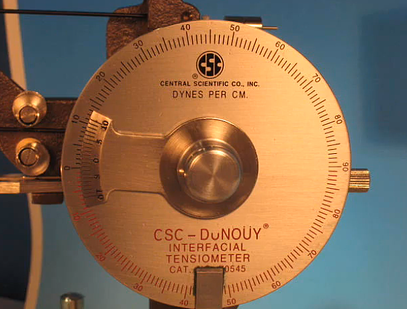
If you have ever looked at a manual tensiometer guage like this one you will notice the dial only goes to 90 (90 dynes per centimeter).  

manual tensiometer

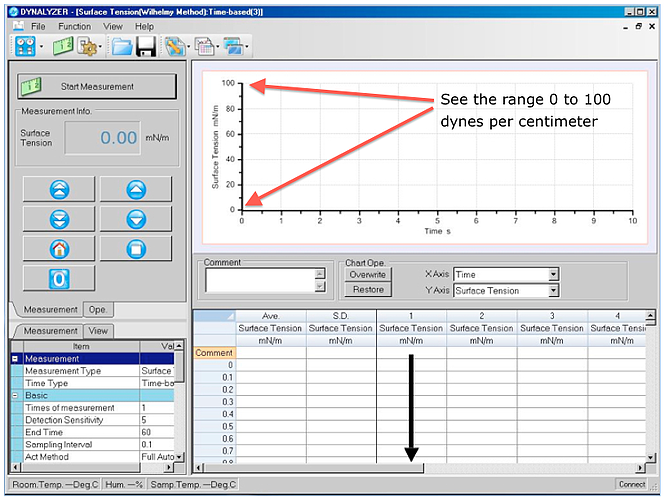
Compare this to some of the automatic tensiometers that use sensitive electronic balances and software and you will notice they have for the most part (various models) a range up to around 100 (100 dynes per centimeter).  See the red arrows below;

automatictensiometerimage

Why not make them with larger ranges?

Up to this point you have seen a couple of examples of the range capabilities for a manual and an automatic tensiometer. The truth of the matter is that the dial on the manual tensiometer could be re-etched to include additional numbers going up much higher than 90.  And the automatic tensiometers using the electronic balances could be configured and the software re-written to go as high as 1,000! 

So why haven't the engineers who make these tensiometers made the range on their tensiometers as big as they can?  Wouldn't that make the tensiometer that much more appealing?  A bigger range would mean you could measure more samples right? 

Well maybe...but not on this planet or in this universe. 

Liquids and fluidic metals?

You see, the answer is not really about the tensiometer.  In general, except for fluidic metals there are no known liquids that will indicate a surface or interfacial tension above 90/100 dynes per centimeter.  Surface tension of Mercury for example is generally reported around 480 dynes per centimeter but it does not wet to either the Wilhelmy Plate or Du Nouy Ring and cannot be measured by a traditional tensiometer.  Other fluidic metals need high temperatures and special atmoshperic conditions and are also unsuitable for traditional tensiometers.  With the exception of fluidic metals just mentioned solutions including metal ions but excluding surfactants (e.g. plating solutions) indicate comparatively high surface tension readings of 80 to 90 dynes per centimeter at most.  One of the highest surface tension liquids except Mercury is Sodium Chloride 6.0mol/20°C at 82.55 dynes per centimeter (mN/m).

In summary then, we can conclude that all of the liquids we will encounter while measuring surface tension or interfacial tension with a traditional tenstiometer will fall in the range not to exceed 100 dynes per centimeter.  Therefore restating the obvious you don't need a tensiometer that can measure surface tension above 100 dynes per centimeter.

Make sense?


 Click here to go to the platinum page


Continue Reading

Tensiometer Ring used for ASTM D971, ASTM D1331, ASTM D1590

By Hank Levi on Fri, Nov 30, 2012 @ 11:15 AM

There are many ASTM methods companies follow.  Here are a few of the more popular ASTM methods relating to surface and interfacial tension:

  • ASTM D971; Interfacial tension of oil against water: This standard is used to evaluate hydrocarbon fluids and possible contamination levels.  Evaluating hydrocarbon fluid contamination levels is important in numerous industries including transformer oil testing and most Fuels.  Our heavy use of petroleum products and the effects of hydrocarbon fluid contamination makes for an almost limitless list of applications that require testing.
  • ASTM D1331; Solutions of surface-active agents:  This standard applies to detergents and soaps but also includes emulsifiers and surfactants.  The test method determines the surface tension of popular substances including diswasher detergents and laundrey soap mixtures in water.
    ASTM D1331 is broken into two separate sections based on the liquid mixture being tested. ASTM D1331 method A applies to aqueous solutions containing surface-active agents. It includes water with two or more surfactants added. ASTM D1331 states that it "is also applicable to nonaqueous solutions and mixed solvent solutions." This includes electrolytes. ASTM D1331 applies to two-phase mixtures. Two-phase mixtures include a water and surfactant mixture containing air in the form of foam or bubbles. Two-phase mixtures include solid particles with the aqueous mixture. ASTM D1331 states "more than one solute component may be present, including solute components that are not in themselves surface-active." This allows for the surface tension testing of soaps when it includes artificial colorings, scents or skin conditioners. Surface tension testing methods do not change when multiple surfactants are included in the mixture.

    Read more: ASTM D1331 Methods | eHow.com http://www.ehow.com/info_8694874_astm-d1331-methods.html#ixzz2DivCVGeX
     This method applies to both aqueous and non-aqueous solutions
    ASTM D1331 is broken into two separate sections based on the liquid mixture being tested. ASTM D1331 method A applies to aqueous solutions containing surface-active agents. It includes water with two or more surfactants added. ASTM D1331 states that it "is also applicable to nonaqueous solutions and mixed solvent solutions." This includes electrolytes. ASTM D1331 applies to two-phase mixtures. Two-phase mixtures include a water and surfactant mixture containing air in the form of foam or bubbles. Two-phase mixtures include solid particles with the aqueous mixture. ASTM D1331 states "more than one solute component may be present, including solute components that are not in themselves surface-active." This allows for the surface tension testing of soaps when it includes artificial colorings, scents or skin conditioners. Surface tension testing methods do not change when multiple surfactants are included in the mixture.

    Read more: ASTM D1331 Methods | eHow.com http://www.ehow.com/info_8694874_astm-d1331-methods.html#ixzz2DivCVGeX
  • ASTM D1590; Surface tension of industrial water and Industrial waste water


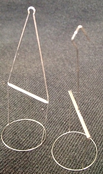
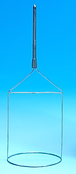
The popularity of these ASTM methods require users to perform many of these tests day-to-day and in the process find themselves in situations where they either need to have their tensiometer ring repaired or replaced.  These platinum wire accessories while possessing a very high and durable melt-point can be damaged easily due to mishandling.  Damaged tensiometer rings can effect results so examine the rings routinely and handle with care at all times.

If you do find yourself in a situation where you need a quick repair for your Du Nouy Ring or need to find a replacement let us know.

 
   Tensiometer RingsDu Nouy RingTensiometer Ring


                          Request Tensiometer Ring Help


 Click here to go to the platinum page


Continue Reading

Automatic Titrator with Mini Sample Changer Video

By Hank Levi on Tue, Nov 20, 2012 @ 11:11 AM

AT-700 Automatic Titrator

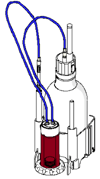
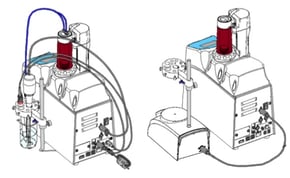
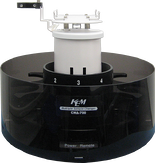
The AT-700 automatic titrator provides operators a variety of choices including the use of an Mini Sample Changer CHA-700integrated mini sample changer.  The mini sample changer can hold up to 6 samples.  The design utilizes a rotating arm that holds the electrode(s), dispensing nozzle(s), and propeller stirrer above each sample and maneuvers from sample to sample.  The compact design allows a small footprint on the bench because the titrator sits on top of the sample changer.  Watch the short demo video to learn more about this titration system.


        Get more information here 


Continue Reading

Automatic Titrator AT-700

By Hank Levi on Mon, Nov 05, 2012 @ 02:31 PM

Automatic Titrator AT-700

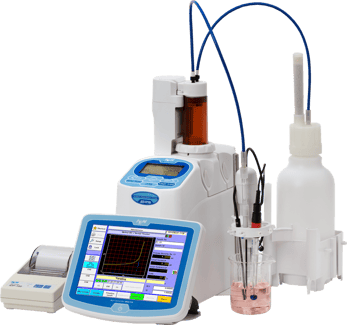
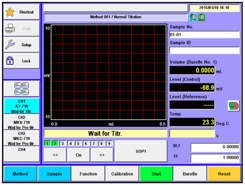
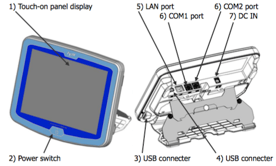
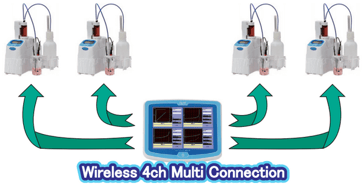
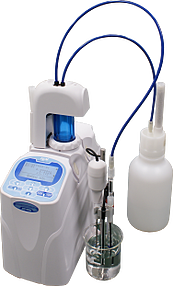
The AT-700 automatic titrator is a new compact potentiometric titrator.  The unit is ideal for conducting basic end-point titrations all the way up to more complex configurations that can include a sample changer, an additional permanent burette, to a chain of 8 automatic piston burettes (APBs).  The titrator can work stand alone or pair with advanced computer controlled software. 

Watch the video to learn and see more: https://youtu.be/CymMenF1fqA


Continue Reading

About Scientificgear

By Hank Levi on Fri, Aug 31, 2012 @ 10:20 AM

describe the image

Scientificgear LLC provides several targeted areas of service including:

  • Karl Fischer Moisture Titration
  • Titration
  • Surface Tension (Tensiometers and Du Nouy Rings)
  • Contact Angle Analyzers for surface analysis
  • Thermal instruments (WBGT, Conductivity, Heat Flow)
  • Liquid Density Instruments (Benchtop and handheld)
  • Refractometers, Brix Meters

We support companies and organizations in select industries by providing:

  • Technical Support
  • Sales of Instruments
  • In-house and field repair service on select instruments
  • Calibration Service
  • Training and Installation
  • Some in-house testing
  • Manufacture and repair of Du Nouy Rings

Continue Reading

Titration: Bromine number vs. Bromine Index

By Hank Levi on Mon, Aug 27, 2012 @ 12:09 PM

BROMINE TITLEDon’t know whether you need to run a Bromine Number or Bromine Index?  Not sure what the difference is between Electrometric or Coulometric?  And just how many approved ASTM methods are there, anyway? 

Well, a good place to start is to check out the comparison table below and evaluate your sample(s) with respect to the scope & limits of products listed for each method.

If you’re trying to decide which of the last two Bromine Index methods to use, remember that the D1492 Coulometric method is most often employed for materials having very low expected values ( > ~20).

Be careful about converting back and forth between the two using that factor of 1000.  You can safely convert a Bromine Index to a Bromine Number by dividing it by 1000, but it’s not OK to derive a Bromine Index from a Bromine Number by multiplying the Number by 1000.

                                         DOWNLOAD A COPY

Need to run Bromine Number or Bromine Index with an AUTOMATIC TITRATOR?

OR

Interested in getting more detailed information on how to do Bromine using your KARL FISCHER TITRATOR

              Get the complete Karl Fischer method here

Find more Coulometric Karl Fischer Titrator information  Bromine Chart

Continue Reading

Recent Posts